
Guide
LED solar blinkers: applications and installation
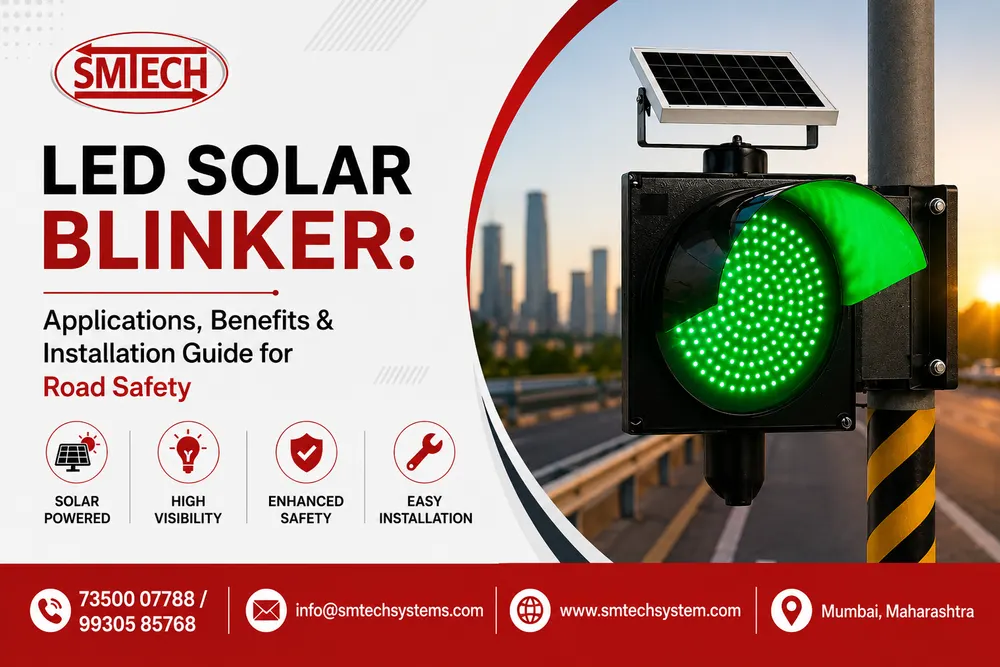
Increasing traffic on highways, city streets, industrial and rural roads has made road safety a primary concern. Traffic warning systems are crucial for minimizing accidents, enhancing visibility and awareness for drivers, and directing vehicles safely through dangerous areas. The Solar LED Blinker is one of the most effective traffic safety solutions on offer today, it is energy efficient, low maintenance, and reliable. Solar-powered blinkers use renewable solar power, so they do not need to be powered continually, or have expensive underground wiring. The systems feature high brightness LED lights and rechargeable batteries, ensuring that they can flash continuous signals both day and night, and are suitable for road intersections, construction sites, pedestrian crossing, school zones and accident prone areas.
What is an LED Solar Blinker?
LED Solar Blinker is a traffic safety device powered by solar energy, which is capable of flashing high-intensity LED lights at predetermined intervals or continuously to warn road users. A solar panel is attached to the unit and during daylight hours it absorbs sunlight and stores the energy in a rechargeable battery. This stored electric power allows the LED lights to operate after dark or when the light is not sufficient enough to power them on. A Solar LED Blinker is especially designed to give the highest visibility with lowest power consumption. It is widely used in areas where the use of traditional electrical facilities is not possible or not easy to maintain, due to its autonomy. Today's blinkers feature weatherproof housings, long-life LED technology, high-efficiency PV panels and intelligent charge controllers, allowing them to be used outdoors all year long.
Applications of LED Solar Blinkers
The versatility of LED solar blinkers makes them suitable for a wide variety of road safety and traffic management applications.
- Highways and Expressways - Visual warnings are essential on high speed roads to warn drivers of curves, junctions, lane diversions and accident prone areas. The Solar LED Traffic Blinker system enhances driver visibility by generating highly visible flashing signals, both during daylight and after dark.
- Road Intersections - At busy intersections, vehicles tend to move rapidly, which can lead to collisions. The installation of traffic blinkers at these locations help to control the movement of vehicles and helps to slow down the drivers before entering the junction.
- School Zones - Extra precautions are needed for children crossing the road. Blinkers with solar lighting, located around schools, draw the attention of traffic to slow down and be more cautious near schools during the school day.
- Pedestrian Crossings - Blinkers are designed to increase visibility of zebra crossings during early morning, evening and poor weather conditions, and enhance pedestrian safety.
- Construction and Work Zones - Temporary road construction sites require highly visible warning systems. Traffic solar blinker units provide continuous flashing signals that help drivers identify diversions, barricades, and work areas from a safe distance.
- Industrial Areas - LED blinkers are provided at manufacturing units, warehouses, logistics parks and industrial estates to enhance the traffic management within the premises and minimise the risk of accidents occurring.
- Parking Areas - Blinkers are used in commercial complexes, malls, hospitals, airports, and large parking lots to direct cars and speed up traffic flow around entry and exit areas.
- Rural Roads - There is a lack of continuous street lighting on many rural roads. Solar activated traffic blinkers can safely be used to warn motorists at hazard spots such as narrow bridges, railway crossings, village intersections and at any dangerous bend.
Benefits of LED Solar Blinkers
LED Solar Blinkers offer several advantages over conventional electrically powered warning lights.
- Energy-Efficient Operation - The blinkers use only solar power, so they do not require any electric power consumption, and offer huge savings in operating expenses.
- Environment-Friendly Solution - Solar blinkers are powered by renewable energy from the sun, which helps to lower carbon emissions and promotes sustainable infrastructure development.
- Easy Installation - Since external wiring is not required, installation is quick, simple, and suitable for both permanent and temporary road safety projects.
- Low Maintenance - High-quality LED components, rechargeable batteries, and weatherproof construction minimize maintenance requirements while ensuring long service life.
- High Visibility - The 75 W LED Solar Blinker provides bright and highly visible flashing signals that help improve driver awareness from a greater distance. It is designed to be solar-powered, which means it can be operated efficiently without the need for electricity.The design is efficient and solar powered, making it reliable to operate and cut down on electricity bills and maintenance.
- Reliable Performance - These blinkers are designed for continuous outdoor use, ensuring reliable performance even in remote areas with no electrical power.
- Cost-Effective Investment - Solar LED blinkers are an extremely cost-effective traffic solution as they are energy efficient, require minimal maintenance and have a long life.
- Weather-Resistant Design - The units are made from long-lasting materials and are designed to endure rain, dust, heat and humidity, providing consistent performance all year round.
Installation Guide for LED Solar Blinkers
Place the blinker in a location where it will be effective to alert road users, including intersections, sharp curves, pedestrian crossings, school zones, construction sites and accident prone roads. Make sure that there are no obstacles that can impede visibility.
- Choose the Right Location - The solar panel should face direct sunlight for most of the day to ensure efficient charging of the battery. Do not install the unit under trees, buildings or other structures that create shadows.
- Position the Solar Panel Correctly - Ensure a strong pole (galvanized or MS) capable of withstanding wind and harsh weather conditions. When it is mounted properly, the blinker is stable and it is always visible.
- Secure the Mounting Pole - Use a strong galvanized or MS pole that can withstand wind loads and harsh weather conditions. Proper mounting ensures the blinker remains stable and visible at all times.
- Install at an Appropriate Height - The blinker should be mounted at a height that allows drivers to easily notice the flashing signal from a safe distance without obstruction.
- Test the System - After installation, verify the charging system, battery performance, LED flashing pattern, and overall operation to ensure the unit functions correctly.
- Regular Maintenance - Although LED Solar Blinkers require minimal maintenance, periodic cleaning of the solar panel, battery inspection, and checking electrical connections help maintain optimum performance and extend service life.
Frequently asked questions
Is an LED Solar Blinker suitable for road safety?
Yes. LED Solar Blinkers are especially engineered to enhance roadway safety by ensuring that flashing signals can be seen from a considerable distance, at intersections, highways, pedestrian crossings, school zones, sharp curves and other accident-prone areas.
Can LED Solar Blinkers work during cloudy or rainy weather?
Yes. The solar energy is captured during the day by the built-in rechargeable battery, which will keep the LED blinker running even in cloudy weather, rainy conditions and at night.
Where can LED Solar Blinkers be installed?
LED Solar Blinkers can be used in highways, city roads, school zones, pedestrian crossing lightings, construction sites, industrial premises and on railway crossings, village roads and parking areas where enhancement in traffic visibility and road safety is needed.
This guide is general information and does not describe a specific model. Specifications and prices of our products are on their own pages and are confirmed in a written quotation.
Tell us what you need.
Send the product, the quantity and where it will be installed. We reply with a written quotation.